- English
- French
- German
- Portuguese
- Spanish
- Russian
- Japanese
- Korean
- Arabic
- Greek
- German
- Turkish
- Italian
- Danish
- Romanian
- Indonesian
- Czech
- Afrikaans
- Swedish
- Polish
- Basque
- Catalan
- Esperanto
- Hindi
- Lao
- Albanian
- Amharic
- Armenian
- Azerbaijani
- Belarusian
- Bengali
- Bosnian
- Bulgarian
- Cebuano
- Chichewa
- Corsican
- Croatian
- Dutch
- Estonian
- Filipino
- Finnish
- Frisian
- Galician
- Georgian
- Gujarati
- Haitian
- Hausa
- Hawaiian
- Hebrew
- Hmong
- Hungarian
- Icelandic
- Igbo
- Javanese
- Kannada
- Kazakh
- Khmer
- Kurdish
- Kyrgyz
- Latin
- Latvian
- Lithuanian
- Luxembou..
- Macedonian
- Malagasy
- Malay
- Malayalam
- Maltese
- Maori
- Marathi
- Mongolian
- Burmese
- Nepali
- Norwegian
- Pashto
- Persian
- Punjabi
- Serbian
- Sesotho
- Sinhala
- Slovak
- Slovenian
- Somali
- Samoan
- Scots Gaelic
- Shona
- Sindhi
- Sundanese
- Swahili
- Tajik
- Tamil
- Telugu
- Thai
- Ukrainian
- Urdu
- Uzbek
- Vietnamese
- Welsh
- Xhosa
- Yiddish
- Yoruba
- Zulu


Shenzhen Kingwe-Star Opto-Electronics Technology Co., Ltd.
CATEGORIES


Feedback from customers towards us
Product Recommendations


_1779947543005.jpg)
_1779947124928.jpg)

_1779702565761.png)
Popular Blogs

Across Dubai, Abu Dhabi, and Sharjah, roads, tunnels, power stations, and ports are expanding. Night crews, road crews, and technical teams need reliable, hands-free light to stay safe. This article explains why LED headlamp flashlights from China are an effective choice for UAE infrastructure projects, how to select the right model for demanding environments, and how to work with a trusted supplier to meet compliance and delivery requirements.
Why Are LED Headlamp Flashlights Essential for UAE Infrastructure Projects?
Infrastructure work in the UAE runs around the clock. Heat, dust, and complex site layouts demand lighting that is bright, stable, and hands-free. LED headlamp flashlights offer those benefits and more. LED technology converts more energy into light with less heat compared to traditional bulbs, which extends runtime and reduces replacement cost. The result is safer excavation, smoother road resurfacing, and faster inspections in tunnels and viaducts.
UAE cities invest heavily in roads, rail, utilities, and ports. Road networks and public transit expansions in Dubai and Abu Dhabi require frequent night shifts. Construction of new airports, including a second runway project in Abu Dhabi, amplifies demand for dependable, portable lighting. Ports like Jebel Ali handle heavy traffic and diverse logistics. In each case, workers need steady illumination to coordinate safely, avoid hazards, and complete tasks on schedule.
Project managers prefer headlamps for several practical reasons. The units free both hands for operating tools, reading plans, or handling safety equipment. Modern LED headlamps are compact and lightweight, so they integrate well with helmets and protective gear. Adjustable focus and beam angles allow precise control for close work or long-distance scanning. Many models include pulse or strobe modes for signaling in emergencies, a useful feature across large work zones.
Climate adds pressure. High temperatures and dust storms test every piece of equipment. An IP-rated LED headlamp flashlight, sealed against dust and splashes, keeps working when the environment turns harsh. For teams working nights or in low-visibility conditions, consistent color temperature and color rendering help distinguish objects and surfaces accurately. These details support quality work and reduce rework, an important factor for large-scale infrastructure projects.
Fact: Energy-efficient lighting now dominates most new installations. LED sources are widely adopted in municipal and commercial projects globally, reducing energy consumption and maintenance burdens (IEA).
Choosing the Right LED Headlamp for Construction, Tunnels, Utilities, and Ports
Selecting the right LED headlamp flashlight means matching beam quality, durability, battery performance, and control features to real work scenarios. Engineers often compare units across a common set of criteria: luminous output, beam distance, color temperature, runtime at typical settings, ingress protection rating, impact resistance, and ergonomic design. Each criterion influences safety, productivity, and total cost of ownership.
Beam Quality and Color Temperature
Beam quality matters on sites where close coordination and long-distance visibility are both needed. Flood beams spread light for close tasks. Spot beams throw illumination farther to scan walkways, equipment, or road surfaces. Many LED headlamp flashlights allow users to switch between flood and spot, or combine both with a dual-beam setup.
Color temperature affects perception and comfort. Warmer tones around 3000K are easier on the eyes during long night shifts. Cooler tones around 5000K–6500K improve clarity and contrast for technical inspection tasks. Color Rendering Index (CRI) above 80 helps distinguish true colors of cables, markings, or safety signs. For teams inspecting paint lines or cables, higher CRI reduces misidentification and supports quality assurance.
Durability and Ingress Protection
Ingress Protection ratings such as IP54 or IP65 indicate resistance to dust and water. On UAE sites, choose at least IP54 for general construction and IP65 for areas with frequent washdowns or exposure to water jets. Impact resistance, measured by IK ratings or drop tests, ensures survival when tools or materials knock the unit. ABS housings resist scratches and maintain structural integrity under stress. These characteristics lower the risk of sudden failures and keep crews focused on the job.
Battery Performance and Controls
Battery capacity and management determine reliability. Lithium-ion packs deliver higher energy density and longer runtimes compared to older battery chemistries. On busy sites, runtime at common output levels matters more than peak lumens. Look for battery indicators that show remaining charge in clear steps. Mode memory and easy switching help reduce time spent fiddling with controls when hands are gloved or dirty.
Safety features also matter. Overheat protection prevents damage during prolonged use. Short-circuit protection and regulated output maintain stable light as the battery discharges. These safeguards extend product life and avoid abrupt dimming during critical moments. For fleet management, fast charging and replaceable battery options reduce downtime and keep headlamps available when needed.
Comfort and Ergonomics
LED headlamp flashlights sit on helmets or headbands for hours. A balanced design prevents pressure points. Elastic headbands adjust quickly and hold firm on hard hats. Weight distribution across the strap reduces neck strain. Breathable padding improves comfort in heat. Some models include a top strap for heavy-duty use, which keeps the unit stable when workers move through tunnels or climb structures.
Finally, check mounting options. A quick-release bracket allows fast removal for charging or transfer between tasks. Cable routing avoids snags on tools. Lock modes prevent accidental activation during transport, preserving battery life for the next shift.
From China to UAE: Supplier Selection and Quality Assurance
Infrastructure projects run on predictable timelines. Supplier selection should balance cost, quality, and lead time. China’s LED headlamp flashlight manufacturing ecosystem is mature, with strong component supply, rapid prototyping, and scalable assembly. This environment supports projects that need consistent volumes, flexible customization, and reliable delivery across long distances.
China Supply Chain Strength
Shenzhen is a global hub for electronics and high-tech manufacturing. The city is a leading export engine with international influence in electronics, high-tech manufacturing, and global supply chains. That foundation translates into robust access to LEDs, drivers, battery cells, and injection-molded housings like ABS. For project managers, it means faster sampling, tighter quality control, and predictable production schedules.
LED headlamp flashlight production in China benefits from well-developed standards. Factories work with common test protocols, including photometric tests, battery safety checks, and environmental screening. Many facilities operate ISO 9001 quality systems and support export compliance documentation. That infrastructure shortens the path from sample approval to mass production and keeps shipments aligned with project milestones.
Cost advantage remains meaningful, but the bigger value lies in flexibility. Projects frequently require adjustments in beam patterns, output levels, or color temperature. Chinese suppliers with mature R&D teams can adapt designs quickly, integrate new features, and maintain consistent output across large batches. For infrastructure programs that evolve over months, that agility reduces risk and keeps the project moving.
Customization for Project Requirements
Customization helps units match specific site needs. A municipality may need beam patterns optimized for road resurfacing. A utility contractor may prefer higher CRI for detailed cable inspection. A port operator might request rugged housings with clear battery indicators and easy lock modes. When working with experienced suppliers, teams can define output curves, switch logic, and enclosure materials upfront, then lock in specifications for production.
Branding and packaging matter for large programs. Consistent labeling, serial number tracking, and clear safety markings simplify inventory and training. For multi-site deployments, supplier support with retouching and documentation reduces internal overhead and helps maintain standards across teams.
FAQ
Q1: What beam settings are best for road resurfacing and tunnel inspections?
A: For road resurfacing, use a balanced flood-and-spot pattern. Flood illuminates the immediate work area while spot checks edges and equipment. For tunnel inspections, a longer throw spot beam helps scan ahead, and a moderate flood helps with close-up checks of signage, cables, and joints.
Q2: How do I select the right ingress protection rating for UAE sites?
A: Choose at least IP54 for general construction and IP65 where water jets or frequent washdowns occur. Higher IP ratings add protection against dust and moisture, which is important in desert and coastal environments.
Q3: How long should a headlamp run on a typical night shift?
A: Aim for 8–12 hours at practical output levels. LED headlamps are efficient, and lithium-ion packs provide extended runtime. Check mode memory and use steady modes for consistent illumination throughout the shift.
Q4: What certifications should I look for?
A: Align to IEC standards for luminaires (IEC 60598), photobiological safety (IEC 62471), and battery safety (IEC 62133). CE and RoHS are commonly requested. Share a technical file that includes photometric data, battery specs, and test reports with your project team.
Q5: How can I reduce downtime across a large fleet?
A: Use battery indicators, lock modes, and fast charging. Keep spare packs and simple charging routines. Track performance and replace units on a cycle to avoid failures during critical periods.
LED headlamp flashlights from China provide a dependable, efficient lighting solution for UAE infrastructure projects. Selecting models with the right beam, durability, and battery performance improves safety and productivity. Working with a mature supplier streamlines customization, compliance, and delivery. Kingwe-Star Opto-Electronics offers factory-direct support, robust R&D, flexible customization, and reliable after-sales. The company’s core services include OEM support, fast delivery, and strict packaging standards. If you are interested in the products and want more details or a quote, please contact Kingwe-Star. Send an enquiry to luna@bllgift.com.
References
· International Energy Agency – Lighting Technology Overview
· US Department of Energy – Solid-State Lighting Basics
· IEC – International Electrotechnical Commission Standards Portal
· Abu Dhabi Airport Second Runway Project Overview
· The National – UAE National Roadmap for Energy Efficiency
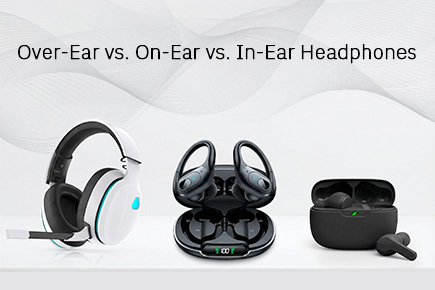
Walk into any office, studio, classroom, or gaming room and you will see the same debate play out: over-ear, on-ear, or in-ear headphones – which is best? Wireless earbuds and Bluetooth headsets are popular, but when buyers start to compare real sound performance, comfort, and reliability, they often come back to one classic solution: over ear headphones with cord.
For business buyers, importers, and brand owners, the question is not only what sounds good. You also care about product stability, manufacturing quality, supply chain security, and long-term cooperation. That is where a well-designed wired over-ear model, made by a mature OEM factory, becomes more than an accessory. It becomes a reliable product line that can support your brand image and margins for years.
Over-Ear vs. On-Ear vs. In-Ear – How Do They Really Compare?
First, let us define the three main types of headphones in simple terms. Over-ear headphones have large earcups that surround the entire ear. On-ear headphones rest on top of the ear without fully enclosing it. In-ear models (earbuds) sit inside the ear canal. Each type has its place, but the right choice depends on how, where, and for how long people will use them.
For many users, especially in education, office, gaming, and light studio work, over-ear models deliver a more immersive and less tiring experience. They block more outside noise, spread pressure over a wider area, and usually support bigger drivers. That means a fuller sound, more stable bass, and less distortion at higher volume. When those over ear headphones with cord units also include a 3.5 mm jack and a detachable or fixed cable, buyers get one more advantage: reliable wired connectivity that is easy to manage across devices.
On-ear headphones are smaller and usually lighter. They can be a good choice for portable listening or low-cost corporate gifting. However, because the pads press directly on the ear, people with longer listening sessions often report fatigue or soreness. Noise isolation is weaker, and sound leakage is more common, which can be a problem in open offices or libraries.
In-ear headphones and true wireless earbuds excel in portability. They are light and disappear into a pocket. Yet they depend heavily on battery capacity and Bluetooth stability. Fit and comfort also vary from person to person, which creates a higher return rate in large consumer projects. Some users love them, while others never feel comfortable placing an ear tip deep into the ear canal for hours.
When we compare all three from a procurement view – total cost, failure rate, customer satisfaction, and cross-device compatibility ,over ear headphones with cord offer a clear middle ground. They are not as fragile or loss-prone as small earbuds, and not as leaky or fatiguing as many on-ear units. They work with computers, tablets, and older devices through a simple 3.5 mm jack, and can be combined with wireless options for hybrid use. This is why many schools, hotels, call centers, and gaming brands continue to specify wired over-ear models in their standard product lists.
Why Serious Listeners and B2B Buyers Prefer Over Ear Headphones With Cord?
If we look beyond consumer fashion trends and focus on what sound engineers, teachers, and IT managers actually use every day, a pattern appears. Many of them rely on over ear headphones with cord. The reason is simple: cables still deliver a stable, low-latency audio signal that wireless alone cannot always match.
In a wired setup, audio travels as an analog or digital signal through the cable directly to the drivers. There is no compression step from Bluetooth codecs, no battery drain concern, and no radio interference from crowded offices. According to testing from organizations like RTINGS, wired playback generally avoids latency problems that gamers, musicians, and online meeting hosts often notice in wireless-only models. For tasks where lip-sync or real-time response matters, this is not a small detail – it is a requirement.
Over-ear designs also give more acoustic space inside the earcups. This allows engineers to tune the frequency range more precisely, especially in the mid and low frequencies. Educational content, corporate training videos, and gaming audio all benefit from this fuller sound field. When students or employees hear voices clearly at moderate volume, they do not need to turn the volume up, which also protects hearing over time.
From a durability angle, a well-built pair of over ear headphones with cord can outlast many wireless earbuds. Cables can be reinforced, earcups can be strengthened, and headbands can be tested for bending and twisting.
How to Choose Over Ear Headphones With Cord for Your Market?
Once you decide that over-ear is the right direction, the next step is to choose the right specification. Here are some key aspects that professional buyers evaluate when they compare over ear headphones with cord from different factories.
Sound performance comes first. Look at the real usable frequency range rather than only a number in a brochure. Most consumer content, from video calls to streaming music, sits between 100 Hz and 20 kHz. A design that focuses engineering resources on this band can deliver voice clarity and musical detail that feels natural, not exaggerated.
Impedance and sensitivity also matter, especially when your headphones will be used across laptops, tablets, and mobile devices. You want a model that plays loud enough from standard outputs without needing a separate amplifier. Professional test reports, even internal ones, show how consistent a factory is in this tuning.
Comfort and build quality are the second major pillar. A comfortable over-ear model usually has soft ear pads, moderate clamping force, and an adjustable headband. Padding materials, stitching quality, and the way the cable enters the earcup all influence how the product ages. A headset that looks fine on day one but cracks or peels in a few months will damage customer trust.
The cable itself deserves special attention. For over ear headphones with cord, the wire is not a secondary part. It is the lifeline of the product. You should consider cable length, thickness, strain relief, and whether the jack is straight or L-shaped. In school use, for example, thicker and slightly shorter cables with robust strain relief near the earcup survive better than ultra-thin wires.
Finally, think about connectivity flexibility. Many modern over-ear headphones now offer dual modes: wireless via Bluetooth or a 2.4 GHz USB dongle, plus wired via a 3.5 mm jack. This structure meets the needs of users who move between laptops, tablets, and phones all day. When the battery is empty, they can simply plug in the cable and continue working or studying without interruption.
Kingwe-Star Opto-Electronics, based in Shenzhen’s mature electronics ecosystem, designs over-ear headphones that follow this logic. We combine a practical frequency response for daily content, stable 3.5 mm wired connectivity, and optional wireless features to support diverse usage scenes. Because we handle R&D, molding, assembly, and testing in-house, we can also adjust details for different regions or channels, like stronger headbands for schools, or upgraded material finishes for premium retail sets.
FAQ
Q1: Are over ear headphones with cord still popular when wireless earbuds are everywhere?
A: Yes. While true wireless earbuds have grown fast, market data from firms like Statista shows that wired and hybrid headphones still hold a large share, especially in education, gaming, office, and professional use. Many users value stable wired connections, no charging pressure, and better passive noise isolation. B2B projects, such as schools and call centers, also prefer wired or dual-mode devices because they are easier to manage at scale and have lower loss and failure rates.
Q2: Why choose a factory in Shenzhen for over ear headphones with cord?
A: Shenzhen is one of the main electronics manufacturing hubs in the world. Its ecosystem covers component suppliers, tooling workshops, test labs, and logistics providers in a tight radius. This concentration allows factories like Kingwe-star to source quality parts, react quickly to design changes, and maintain stable lead times. For buyers, it means more predictable deliveries and competitive pricing, as well as access to updated technologies like Bluetooth, 2.4 GHz wireless, and advanced acoustic tuning.
Q3: What should I check before placing a bulk order for wired over ear headphones?
A: You should verify several points. First, request and test samples to assess real sound quality, comfort, and build. Second, confirm technical specs such as frequency response, connectivity options, cable quality, and compatibility with your target devices. Third, review certifications and the factory’s quality control process. Finally, discuss customization options, packaging, and after-sales policy. Working with an OEM like Kingwe-star, who can provide documentation and clear communication at each step, helps reduce risk and speeds up decision-making.
Q4: Can over ear headphones with cord also support Bluetooth?
A: Yes. Many modern over-ear designs are hybrid. They support wireless communication technology such as Bluetooth and even a 2.4 GHz USB dongle, while still including a 3.5 mm jack for wired use. This structure gives end users the freedom to move around in wireless mode and switch to cable when they need ultra-stable, low-latency audio for games, video calls, or music production. For distributors, this hybrid approach broadens the target market for a single SKU.
Q5: How does Kingwe-star support OEM and branding for headphone projects?
A: Kingwe-star provides a complete OEM service chain. We start from your target market and budget, propose suitable over ear headphones with cord or hybrid models, and then adjust cosmetics, logos, and packaging to fit your brand. A mature R&D team and in-house production enable us to optimize cost structures, control quality tightly, and offer fast delivery. With full sets of certifications, stable and efficient supply chains, and dedicated after-sales support, we aim to build long-term, scalable cooperation, not one-time deals.
Build Your Headphone Line With a Trusted OEM Partner
If you read this far, you already know that the winner in many real-world scenarios is not a trend-driven gadget, but a stable, comfortable pair of over ear headphones with cord. For schools, offices, training centers, gaming setups, and brand-driven retail, a well-engineered over-ear model delivers consistent sound, easy compatibility, and long service life. When this is combined with modern wireless technologies like Bluetooth and a 2.4 GHz USB dongle, plus a standard 3.5 mm headphones jack, users are free to choose how they connect without sacrificing reliability.
At Kingwe-star, we design and manufacture headphones with clear technical foundations. Typical models in our line focus on a practical frequency range of about 100 Hz–20 kHz for daily content, support both wireless and wired connectivity, and are engineered for reasonable charging time (often around 3 hours) when operated in wireless mode. By integrating these specs into robust housings and comfortable earcups, we create products that fit real usage – from long meetings to extended study sessions.
As an in-house factory direct, one-stop, multi-category B2B supplier, Kingwe-star offers more than a catalog. We provide OEM support, fast delivery, strict packaging standards, and a complete set of quality certifications. Our stable and efficient supply chain, flexible customization services, and experienced after-sales team allow global partners to launch and maintain headphone product lines with confidence. Whether you need entry-level wired models for education projects or hybrid over ear headphones with cord and wireless options for your brand store, we can tailor a solution that matches your market.
Now is the right time to turn interest into action. If you want to learn more about our headphone range, receive detailed specifications, or request a customized quotation for your next project, please send an enquiry to luna@bllgift.com. Share your target market, quantity, and preferred features, and our team will respond with clear options and timelines. Let Kingwe-star’s global manufacturing expertise help you build a dependable, profitable product line in the headphones category.
References
1. RTINGS – Headphones Reviews and Measurements
2. Statista – Headphones Industry: Market Data and Trends
3. SoundGuys – Wired vs Wireless Headphones
4. World Health Organization – Deafness and Hearing Loss
5. International Energy Agency – Electronics and Supply Chains (context for global manufacturing)
